With the rise in oil prices, and the government’s desire to electrify the car fleet, electric city cars are booming! Aesthetically attractive, they offer ever-improving ranges at prices that are now more accessible thanks to various purchasing aids.
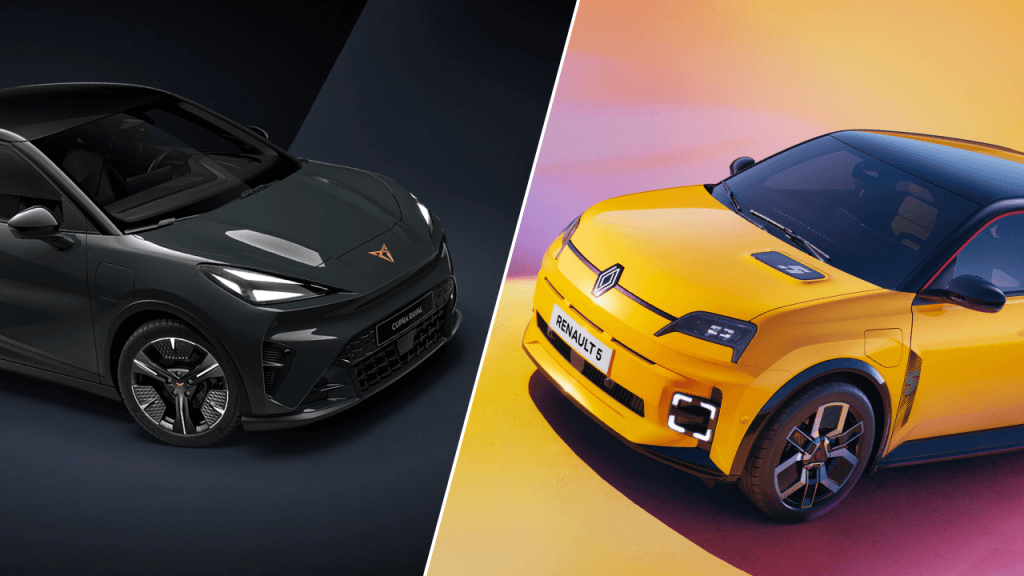
With the arrival of the new Cupra Raval, this category welcomes a very ambitious proposal that intends to overshadow the Renault 5 E-Tech. Each of these two protagonists offers a very distinct personality but has a clear objective: to become the best seller in segment B, in France and in Europe.
Cupra Raval: a sporty and versatile city car
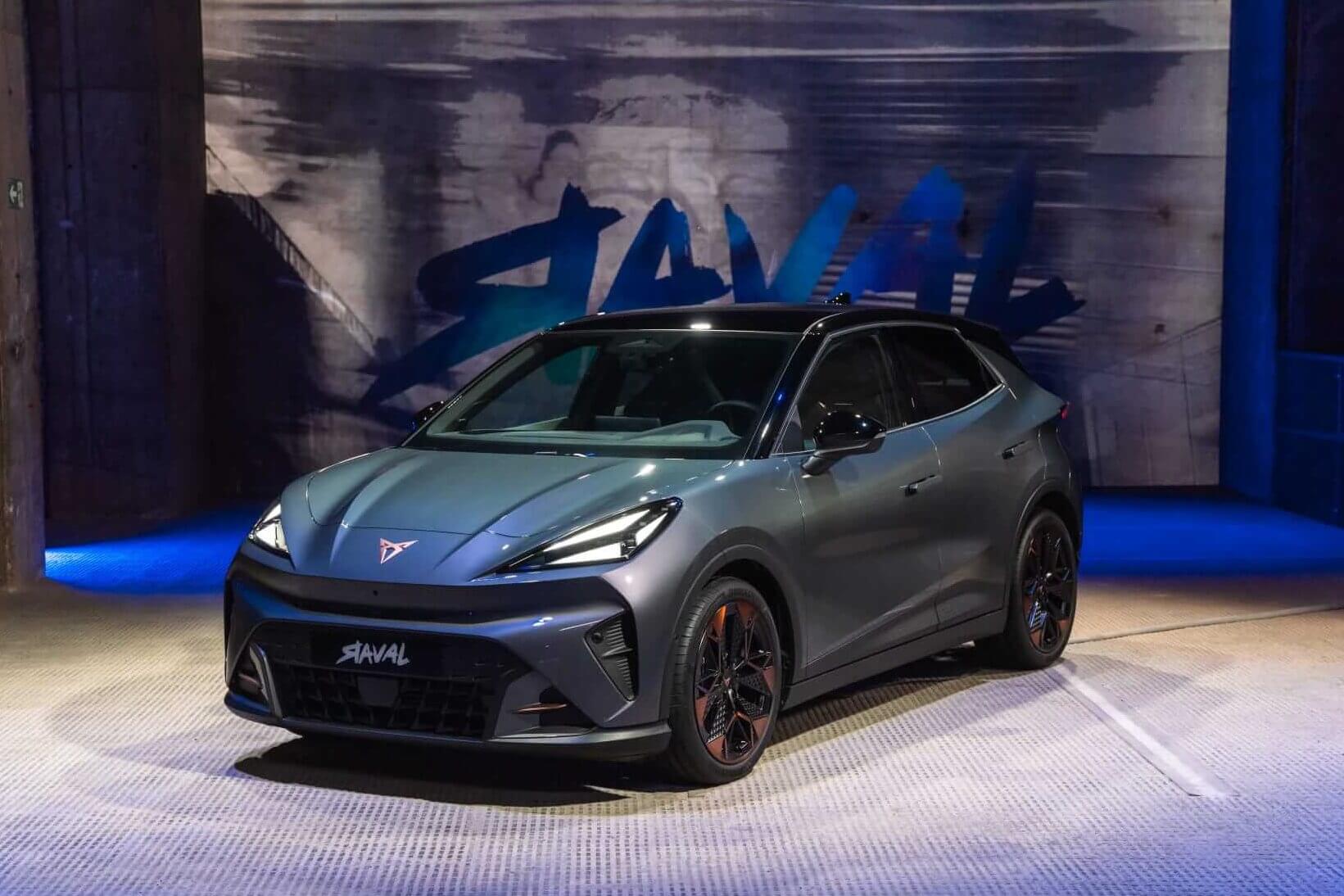
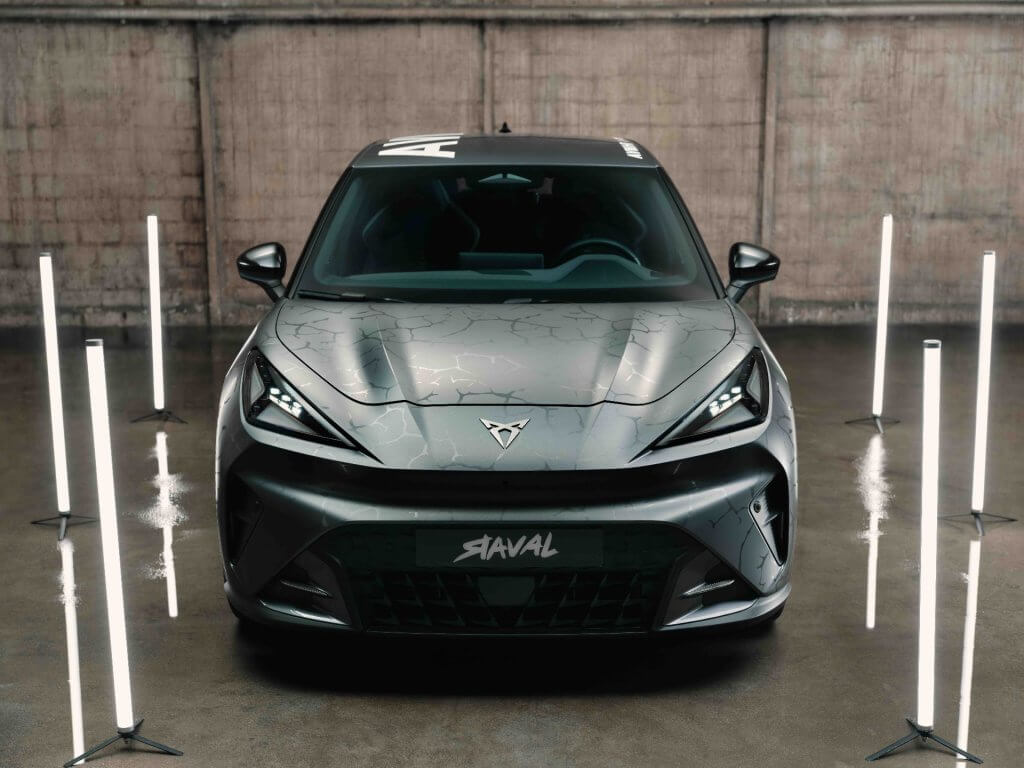
Cupra unveils its very first 100% electric city car. Larger than its French rival by 13 centimeters with its 4.05 m length, the Raval offers a greater wheelbase of 2.60 m compared to 2.54 m for the R5. A difference that is immediately noticeable at the level of the leg space.
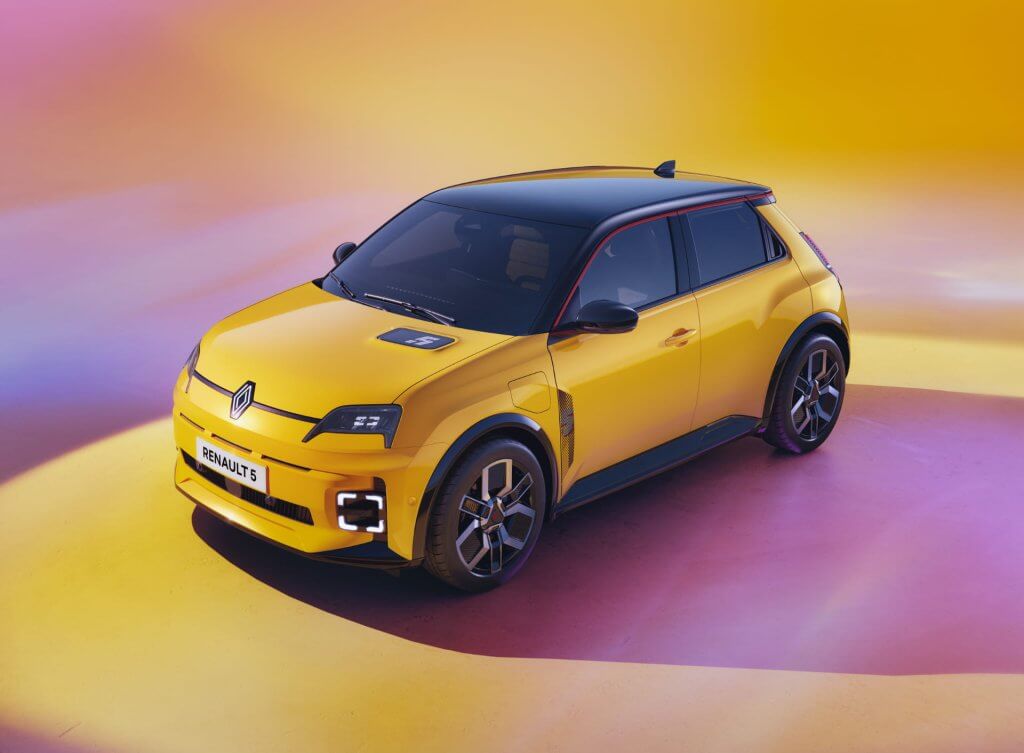
Where the Renault 5 E-Tech plays the retro card, the Raval focuses on sportiness and adopts a more aggressive and techno style, with taut lines and sharp lights. Some versions even offer Matrix LED technology, still rare on this type of car. Its look is reinforced with 17 to 19-inch rims, compared to 18 inches as standard on the R5.
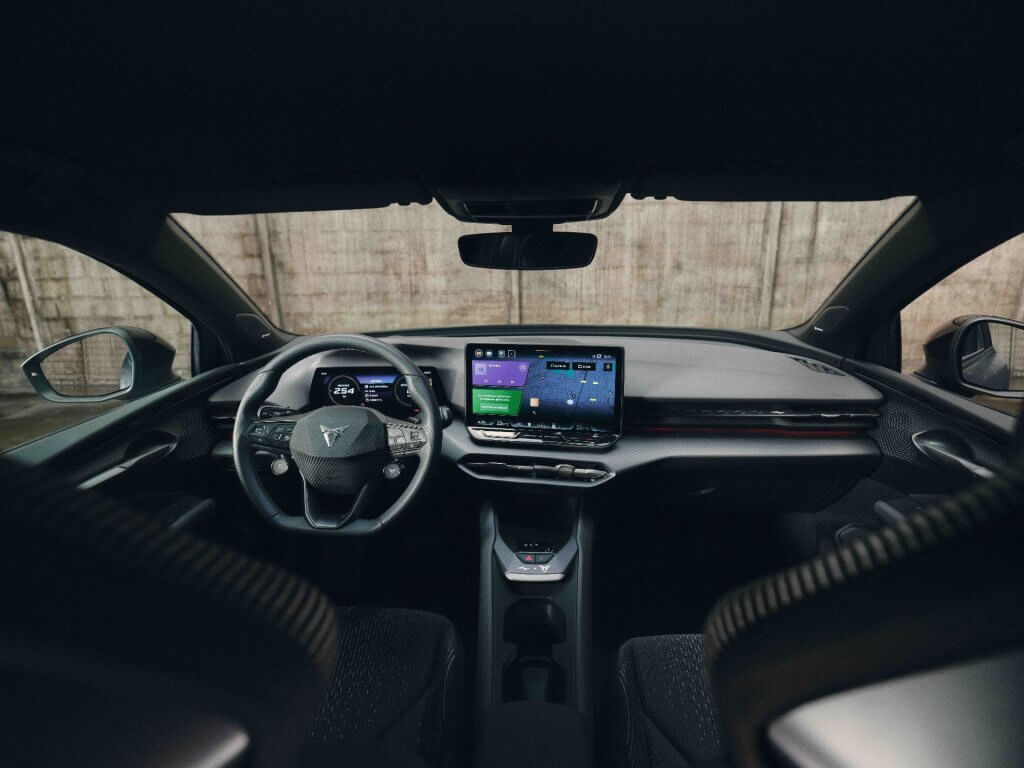
Inside, the atmosphere is modern and premium. A large 13‑inch central screen, a 10‑inch digital cluster — the Raval makes a strong impression. As for equipment, nothing is left to chance, starting right from the base Dynamic version. This trim already offers the essentials with 7 airbags including a central one, automatic emergency braking, lane‑keeping assist, a rearview camera, and wireless charging.
The Dynamic Plus version adds even more technology, such as adaptive cruise control, blind‑spot monitoring, a 360° camera, semi‑autonomous driving with Travel Assist, and for optimal night visibility, Matrix LED headlights.
Finally, the top‑tier VZ Extreme version steps into an even sportier dimension, notably with a limited‑slip differential and specific 19‑inch wheels.
The Raval scores additional points when it comes to the trunk. Its volume exceeds 430 liters, far above the 326 liters offered by the R5. Groceries, luggage — the little Cupra fears nothing. Especially since a huge double floor under the boot allows you to store even more items.
Are you a performance enthusiast? Then you’re in for a treat! Two power levels are offered at launch: 210 and 226 hp, compared to a maximum of 150 hp for the French rival. . The Spanish electric city car also offers a range of up to 446 km on the WLTP cycle, while being more efficient in fast charging, achieving 10 to 80% in just 24 minutes.
In comparison, the Renault 5 E‑Tech is more compact at 3.92 m long. The Renault city car is less versatile and more oriented toward urban use. Its WLTP range peaks at around 400 km, with a slightly longer fast‑charging time of 26 minutes — 2 minutes more than its competitor, and with about 40 km less driving range.
Finally, the Renault 5 can be equipped with a battery of up to 52 kWh. A capacity equivalent to that of the Cupra Raval.
Renault and Cupra: two very distinct visions
With its R5 E-Tech, Renault seeks to democratize the electric car. The goal is not to break performance records but to offer a city car made for everyday life. On the small Renault, everything is designed to facilitate the transition to electric. This requires a playful driving style, a size adapted to the city and above all a controlled cost of use.
Also, the diamond brand relies on the emotional aspect. The design follows the codes of the first R5 launched in 1972, which attracted many baby boomers. This mix between modernity and neo-retro strengthens the relationship with customers who are sensitive to the model’s history.
On the other side, Cupra is taking a more sporty direction. The design is even more pronounced than on the electric R5, with a desire to stand out from the crowd. The Raval focuses on driving experience and a youthful, connected spirit.
The new Cupra Raval does not overlook safety and has a strong card to play against its French rival. Indeed, the Renault 5 was evaluated by Euro NCAP crash tests and received 4 stars. A good result overall, but not perfect. The Raval’s results are not yet known. With 7 airbags as standard and ultra‑modern driver aids, it could easily achieve 5 stars. Such a score would be a real blow to the electric R5.
In terms of pricing, both models benefit from purchase incentives, presented as a “Prime Coup de Pouce.” This aid allows private buyers to reduce the acquisition cost of the vehicle. Depending on household income, the amount can reach up to €5,700. An additional bonus between €1,200 and €2,000 applies to models whose battery is produced in Europe.
The R5 E‑Tech starts at €19,250 in the Five 95 hp version, after deducting the maximum €5,740 Prime Coup de Pouce. The Raval, meanwhile, will be offered at under €26,000, excluding the Prime Coup de Pouce. This entry‑level version will offer a range of 318 km for 115 hp, but will only be available in the third quarter of 2026. At launch, only the high‑end variants with 210 and 226 hp will be offered.
In conclusion, Renault and Cupra offer two city cars with very distinct personalities. On one side, the R5 with its fun, colorful, and decidedly retro look, paired with remarkable agility. On the other, the Raval, more versatile and more spacious, with a sportier approach and an excellent WLTP range of up to 446 km. It’s up to you to decide which one will win your heart and make you want to get behind the wheel.
Will the Cupra Raval manage to dethrone the diamond‑brand star, the leader in electric‑car sales in France ?
Stay tuned !