If the word Yaris immediately makes you think of Toyota, the story of the Yaris is closely tied to the industrial and automotive history of France — more specifically, to the Hauts‑de‑France region. It was in 1999 that the first Yaris rolled off the assembly line at Toyota’s Onnaing plant, near Valenciennes. Twenty years later, another vehicle from the Japanese manufacturer would come off those same production lines: the Toyota Yaris Cross SUV. This version, more of a “crossover,” has a genuine lineage with the Yaris.
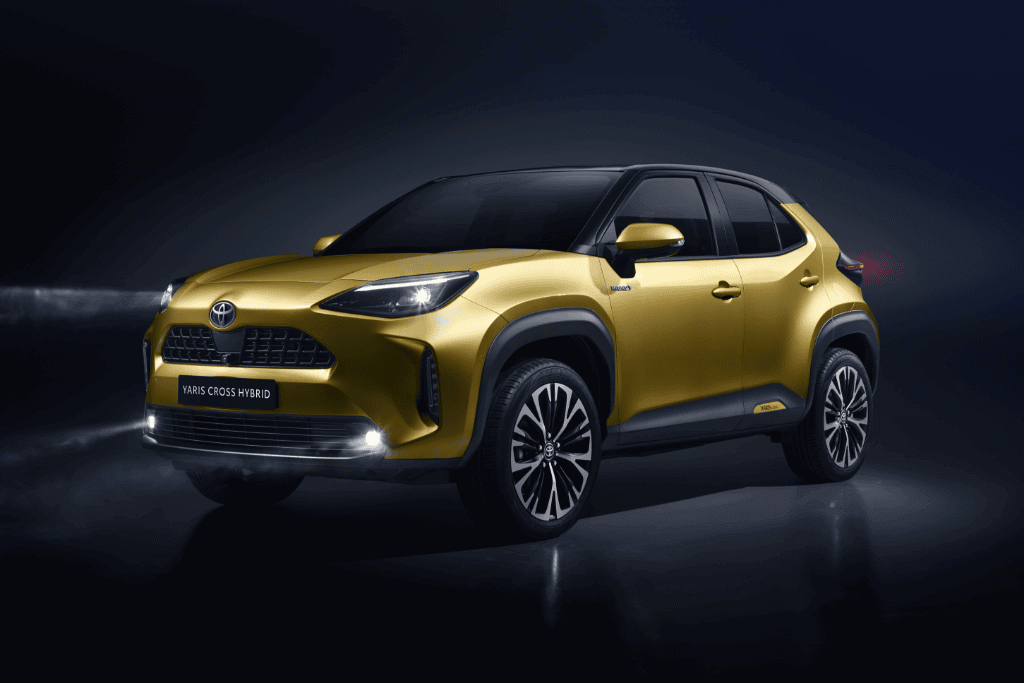
Increased modularity on the Toyota Yaris Cross SUV
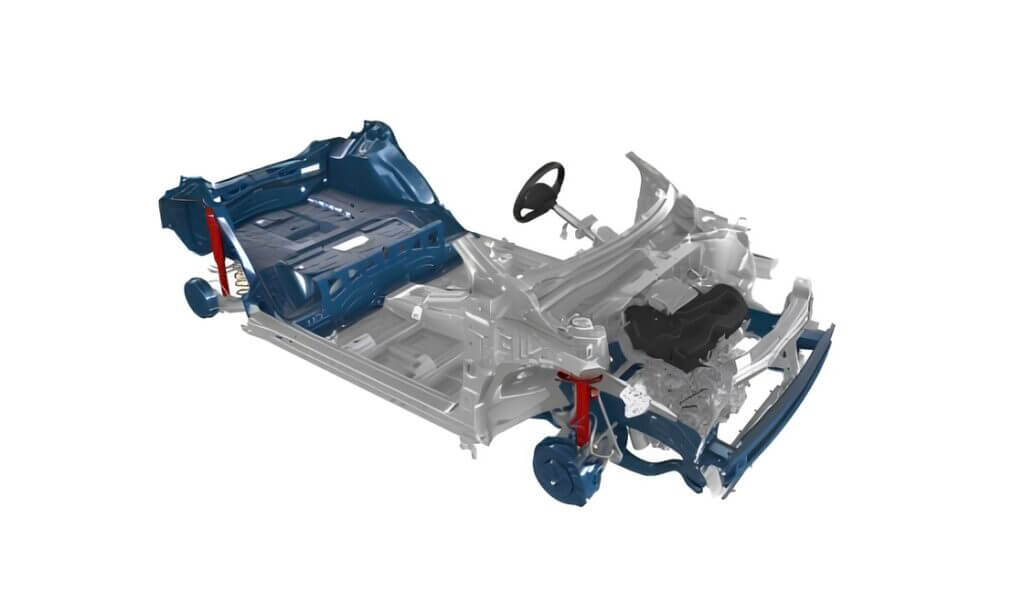
The SUV borrows a number of elements long proven on the Yaris. This new vehicle shares the same underbody, the same running gear, and identical engines as its elder. Only the upper parts are different. The Japanese manufacturer invested €100 million specifically for the Yaris Cross, to develop the production line and the TNGA(1) platform.
This new Yaris Cross offers a bold design. This SUV combines both style and practicality within compact dimensions. A raised ground clearance, larger and more squared wheel arches accommodating 18’’ wheels give this Yaris Cross a decidedly SUV character. The front and rear reveal a strong personality. A massive, solid front end. A wider rear for increased modularity.
Thus, the tailgate opens hands‑free — very practical when your arms are full… The boot floor is height‑adjustable. This allows for a double storage level or for expanding the boot to carry bulky items. In addition, the boot floor itself splits into two parts, increasing available space while optimizing storage under the floor. To achieve greater loading capacity, the rear seats fold down in a 40/20/40 split.
Toyota designed this SUV as a vehicle suited for both road and city driving. With a wheelbase of 2.560 m, similar to that of the standard Yaris. However, the length increases by 240 mm, split between the front overhang (+60 mm) and the rear (+180 mm). Gains that benefit interior space.
Well‑developed powertrains for the Toyota Yaris Cross
A heritage reflected in both hybrid technology and SUV engineering. The Yaris Cross benefits from Toyota’s fourth‑generation hybrid technology. Like the Yaris IV, the SUV adopts the latest generation of the Toyota hybrid system, directly derived from the 2.0‑liter and 2.5‑liter powertrains used in recent models such as the Corolla, Toyota C‑HR, and RAV4. Its petrol engine is a 1.5‑liter three‑cylinder Atkinson‑cycle unit, engineered to reduce friction, mechanical losses, and to optimize combustion speed. As a result, it delivers high torque at low revs and excellent efficiency.
A minimum of 90 g/km of CO₂
Moreover, this engine achieves a thermal efficiency of 40%, superior to comparable diesel engines. This contributes to its low fuel consumption and CO₂ emissions. This new hybrid system delivers a maximum output of 116 hp, with responsive usable power. In terms of emissions, the two‑wheel‑drive version starts at under 90 g/km of CO₂, and the AWD‑i all‑wheel‑drive version stays below 100 g/km(2).
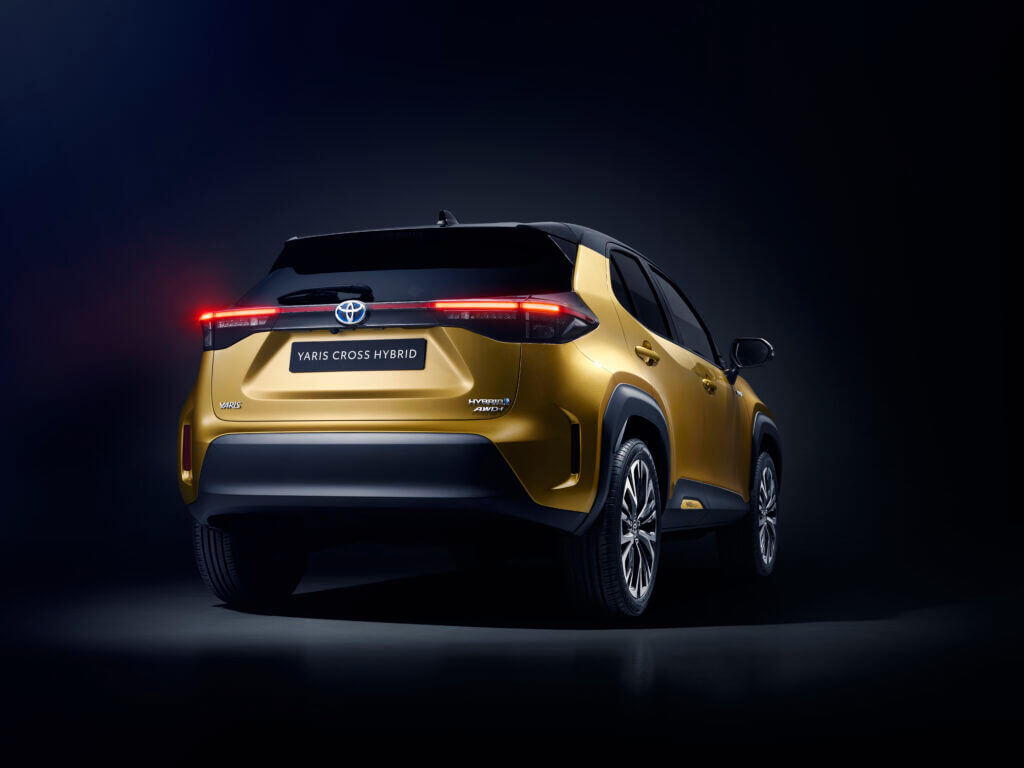
4×4 version available
It is worth noting that the uniqueness of the Yaris Cross lies in its traction capabilities. This SUV can be equipped, as an option, with an intelligent all‑wheel‑drive system. A rare feature in its category for a hybrid model. Thus, “AWD‑i” improves stability and traction in poor conditions and on slippery surfaces. More compact and lighter than a mechanical solution, this electric transmission allows for lower fuel consumption and CO₂ emissions than any other all‑wheel‑drive urban SUV in the same segment.
How does it work?
At start‑up and during acceleration, torque is sent to the rear axle. Under normal conditions, only the front wheels are driven, but if conditions worsen and grip decreases, all‑wheel drive engages automatically (on wet cobblestones, in heavy rain, on slush, or even on sand). Toyota plans to produce more than 150,000 Yaris Cross units per year and hopes to reach over 8% market share in the B‑SUV segment with this model.
The announced prices for the new Toyota Yaris Cross range from €25,500 for a 116 hp 2WD Dynamic version to €34,500 for a 116 hp AWD‑i Première version.
Numerous available features
The Yaris Cross comes standard with Toyota Safety Sense, which includes advanced driver assistance systems such as:
– the Toyota Pre‑Collision System (PCS), which helps the driver detect and avoid other vehicles, pedestrians, and cyclists when a collision risk is identified,
– adaptive high‑beam headlights, standard from the Design trim level,
– intelligent adaptive cruise control, operating down to a full stop,
– lane departure alert with lane‑keeping assistance,
– road sign recognition.
The Toyota Yaris Cross trim levels
Six trim levels make up the range, including the Business trim for companies :
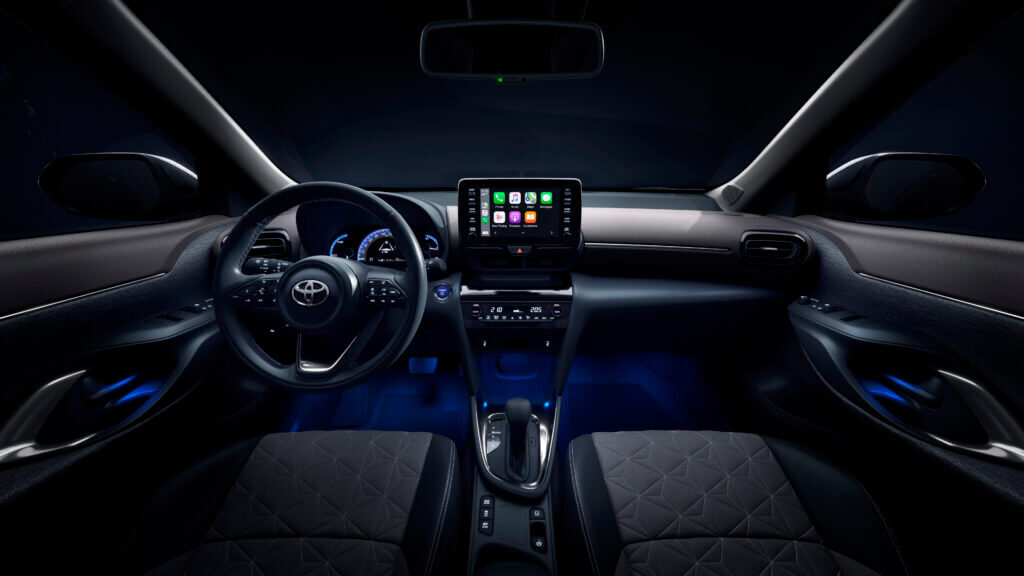
The Dynamic trim, available only in front-wheel drive and features Toyota Safety Sense, rearview camera, automatic climate control, Smart Entry & Keyless Start, 8′ touchscreen, smartphone integration and more connected services or even the leather steering wheel.
Dynamic Business adds to the Dynamic trim 16’’ alloy wheels, front & rear parking sensors, the Toyota Touch & Go navigation system, and the Hybrid Academy training program (eco‑driving support for Business trim buyers).
With the Design trim, the vehicle is equipped with 17’’ alloy wheels, full LED and adaptive headlights, sequential LED indicators, tinted rear windows, an electrochromic rear‑view mirror, and Toyota Smart Connect with a 9’’ touchscreen.
The Trail trim offers a distinctive stylistic approach with 17’’ alloy wheels, roof rails, reinforced front and rear bumpers, as well as front & rear parking sensors and blind‑spot monitoring. This trim also includes a head‑up display, part‑leather seats with lumbar adjustment, dual‑zone automatic climate control, and heated front seats.
The Collection trim universe is also available on the Yaris Cross, featuring a bi‑tone body and equipment similar to the Trail trim.
Finally, the Première trim, available exclusively with all‑wheel drive, offers bi‑tone paint and specific 18’’ alloy wheels. It also includes black leather upholstery, a hands‑free power tailgate, a panoramic roof, an 8‑speaker JBL audio system, and wireless charging. Additionally, Première includes Teammate Advanced Parking with an 8’’ screen and Touch & Go navigation.
(1) Toyota New Global Architecture
(2) Figures in correlated NEDC cycle; in WLTP cycle: from 120 g/km for the two-wheel drive and 135 g/km for the AWD-i; all figures are pending final approval.